
Everyone Says “AI-Powered.” Here's What That Actually Means.
There's a difference between using AI tools and building AI into how your business works. Most companies are doing the first one.
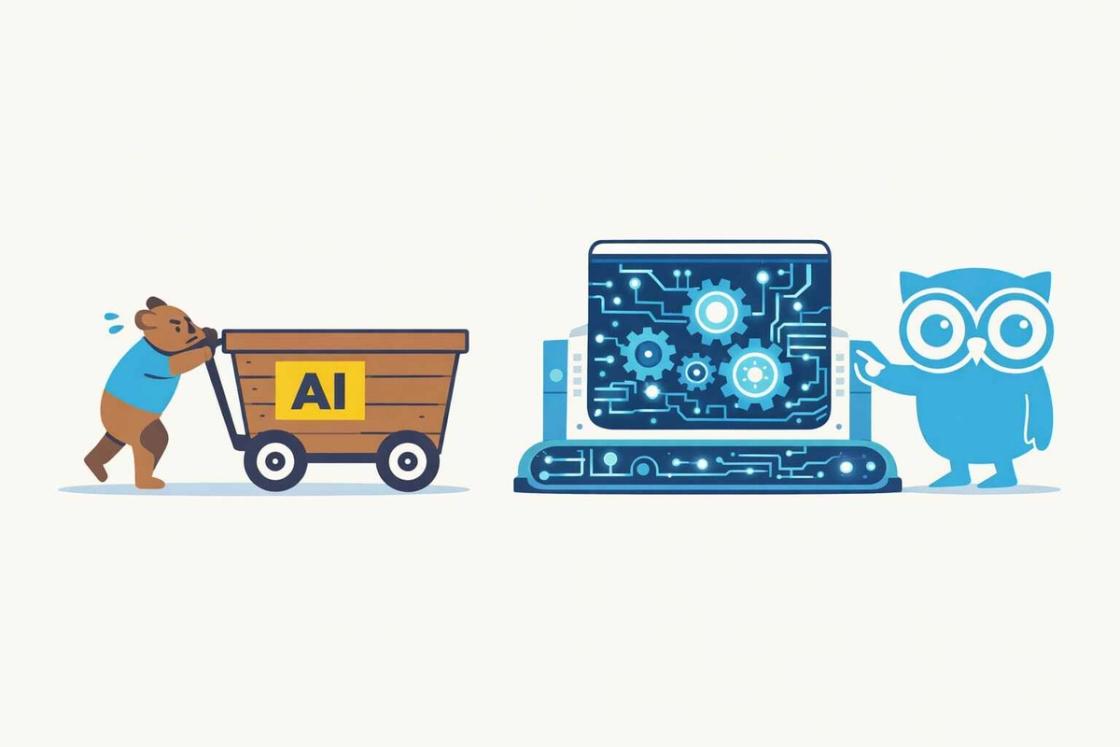
Every agency, SaaS product, and consulting firm is calling themselves "AI-powered" right now. We are too, honestly. But the phrase has become so diluted it barely means anything. So let’s actually talk about what the different levels look like and what moving between them requires.
We went through this exercise ourselves. Two years ago, we were solidly Level 1 — individual team members using AI tools when they felt like it, no system, no standards. Today we’re somewhere between Level 2 and Level 3, with AI woven into our design reviews, content pipeline, analytics, and client reporting. The jump wasn’t automatic. It required deliberate decisions about where AI adds value and where it doesn’t.
0%
of companies say they use AI, but most are Level 1
0%
have AI integrated into actual workflows (Level 2)
<0%
operate with truly agentic AI systems (Level 3)
1
Level 1: AI as a Tool
Individual team members use AI tools ad hoc. No shared standards, no measurement, no institutional learning.2
Level 2: AI in the Workflow
AI is embedded in documented processes. Shared templates, consistent usage, measurable improvements.3
Level 3: Agentic AI
Autonomous systems that monitor, analyze, and act without prompting. AI works alongside your team.
Level 1: AI as a Tool
This is where most businesses are. Someone on the team uses ChatGPT to draft emails. A designer uses Midjourney for mood boards. A developer uses Copilot to write code faster. These are real productivity gains. But they're individual, ad hoc, and not connected to anything.
Nothing wrong with Level 1. But calling it “AI-powered“ is like calling yourself a restaurant because you have a microwave.
The telltale sign: ask three people on your team which AI tools they use and you’ll get three different answers. No shared knowledge, no institutional learning, no way to measure whether AI is actually improving outcomes.
Level 2: AI in the Workflow
AI is integrated into your actual processes. Your content pipeline includes AI-assisted research and drafting. Your QA process uses AI for accessibility scanning and bug detection. Your analytics include AI-generated insights.
This is a meaningful upgrade. The work gets better because AI is embedded in how you operate, not just used when someone remembers to open ChatGPT.
In practice, Level 2 looks like this: your content team has a documented process where AI handles first-draft research and outlines, humans handle strategy and voice. Your development team runs AI-powered code reviews and accessibility audits on every pull request. Your analytics dashboard includes AI-generated annotations that flag anomalies before someone has to notice them manually.
The key difference from Level 1 is consistency. It’s not optional or ad hoc. It’s built into the process so that everyone benefits, not just the early adopters on your team. Getting here requires someone to actually design the workflow, choose the tools, and train the team. It’s a project, not a suggestion.
Level 3: Agentic AI
This is where things get interesting. Agentic systems work autonomously toward goals. They monitor, analyze, recommend, and sometimes act without being prompted. A system that alerts you when site performance drops. An analytics agent that ties marketing activities to pipeline and tells you what to do next. Automated reporting that surfaces insights before you think to ask.
The difference between Level 2 and Level 3 is the difference between a tool you use and a system that works alongside you.
Real-world examples in a marketing context: a content performance agent that monitors your blog traffic, identifies posts losing rankings, and drafts optimization recommendations. A campaign monitoring system that watches ad spend across platforms and pauses underperformers before they waste budget. A competitive intelligence agent that tracks competitor websites and alerts you when they change pricing or positioning.
This isn’t science fiction. These systems exist today. They just require some assembly — connecting APIs, setting thresholds, building custom workflows. But the businesses investing in them now have a compounding advantage that gets harder to catch every quarter.
Tool AI (Level 1)
- Individual usage, no shared standards
- Productivity gains are personal and ad hoc
- No measurement of AI’s impact
- Anecdotes instead of data
- Optional — some use it, some don’t
Agentic AI (Level 3)
- Systems that run without human prompting
- Continuous optimization built into operations
- ROI of AI systems actively measured
- Real-time insights and recommendations
- Embedded — the business runs differently
Calling yourself AI-powered because your team uses ChatGPT is like calling yourself a restaurant because you have a microwave.
Why This Matters
The gap between these levels is widening fast. Companies at Level 3 make faster decisions on better data. They catch problems earlier. They optimize continuously instead of quarterly.
You don't need to jump to Level 3 overnight. But you should know where you are, have a plan for where you're going, and be skeptical of any vendor who says they're “AI-powered“ without explaining what that actually means for your specific engagement.
How to Figure Out Where You Are
Here’s a quick self-assessment. Be honest.
Level 1 indicators
Level 2 indicators
Level 3 indicators
The Vendor BS Detector
When a vendor tells you they’re AI-powered, ask these three questions.
Where does AI touch my project?
What does AI do vs. your people?
How do you quality-check AI output?
The red flag is vagueness. Real AI integration is specific and measurable. Fake AI integration is a logo on a website and a paragraph in a pitch deck.
Where to Start
You don’t need to jump to Level 3 overnight. Pick one workflow — the one with the most repetitive manual work — and integrate AI into it deliberately. Document the process. Measure the before and after. Train the team. Then do it again with the next workflow.
The companies that get this right don’t make a big AI announcement. They just quietly start making better decisions faster than their competitors. And by the time anyone notices, the gap is hard to close.