
Why Your Rebrand Keeps Failing.
You've rebranded twice in five years and it still doesn't feel right. The problem probably isn't the design.
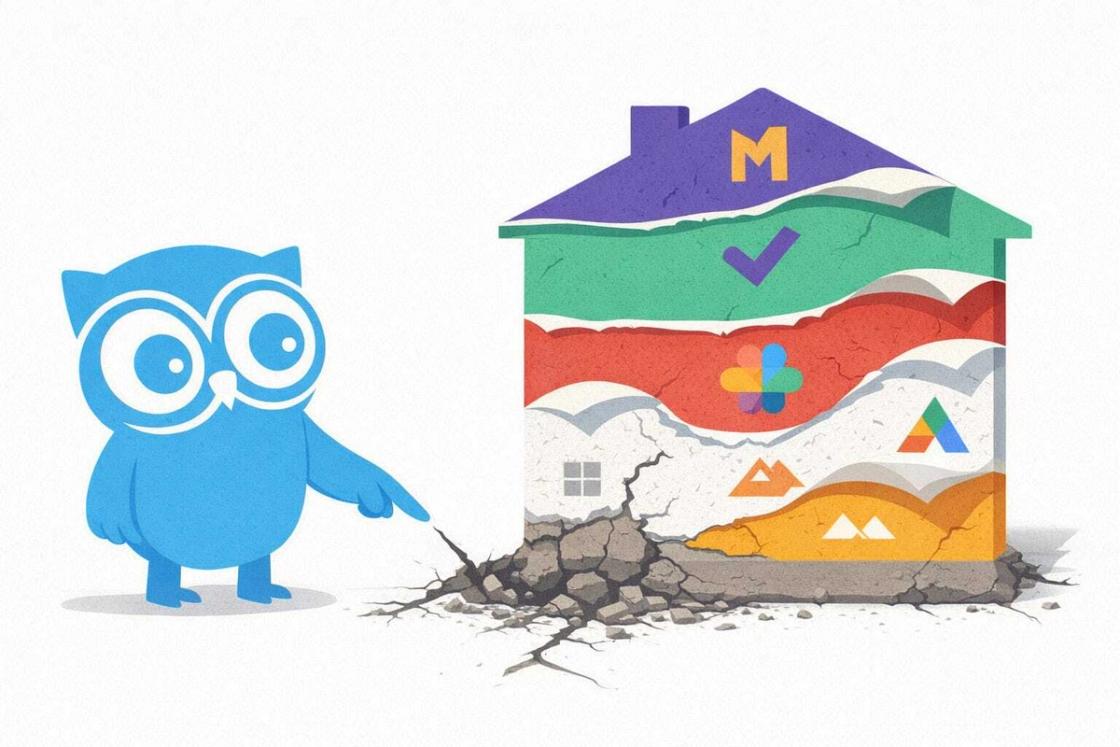
We talk to companies all the time who are on their second or third rebrand. They spent money, got a logo, built a brand guide nobody uses, and six months later everything feels off again. The visuals don’t match the company’s direction. The messaging went stale. The team ignores the guidelines. So they start over.
If this sounds familiar, you’re not alone. And you’re not unlucky. You’re probably making one of five predictable mistakes that doom rebrands before the first mockup ever gets presented.
The problem is almost never the design. It’s what happened before the design started.
0%
of rebrands fail to meet their business objectives
0.0 yrs
average time before a failed rebrand gets redone
$0–100K
wasted on the rebrand cycle when done wrong twice
The Cost of the Rebrand Cycle
Before we get into the mistakes, let’s talk about what the repeated rebrand cycle actually costs you. It’s not just the design fees.
Every rebrand requires months of internal time — meetings, reviews, feedback sessions, implementation. Your team spends energy on something that should have been solved the first time. Every rebrand confuses your market. Customers who recognized your old brand now have to learn a new one. Prospects who were halfway through their decision process suddenly see a different company.
And every failed rebrand erodes internal trust. Your team stops believing in the process. Leadership becomes cynical about branding investments. The next time someone proposes brand work, the response is “we tried that, it didn’t work.” It did work somewhere — just not at your company, because the process was broken.
We’ve seen companies spend $30K–$50K on a rebrand, only to spend the same amount again two years later. That’s $60K–$100K on brand work that never stuck. The same investment, done right once, would have delivered results that lasted a decade.
Mistake 1: You Skipped the Strategy
A rebrand without strategy is just a new coat of paint on the same confusion. If you don’t know who you’re talking to, what you stand for, or how you’re different from competitors, no amount of design work will fix it.
Strategy means making decisions. Hard ones. Who is this brand for? Who is it not for? What are we willing to say that our competitors won’t? What do we believe that might make some people uncomfortable?
Most rebrands skip these questions because they’re difficult. It’s way easier to just pick colors.
Test: ask five leaders at your company to describe your positioning in one sentence. If you get five different answers, you need strategy, not design. Brand strategy should produce a short document everyone references — who you serve, what you believe, how you’re different, and what you refuse to be. If that document doesn’t exist before design starts, the design is guessing.
A real brand strategy process takes 4–6 weeks of research, interviews, competitive analysis, and hard conversations. It produces a positioning document that drives everything else. Skip this and you’re building a house on sand. Every design decision becomes arbitrary because there’s no strategic foundation to evaluate it against.
Mistake 2: You Designed by Committee
Twelve people had input. Everyone’s feedback was treated equally. The CEO’s spouse had opinions about the shade of blue. The result was a brand that offended nobody and inspired nobody.
Good branding requires a small group of decision-makers who trust the process. Get stakeholder input early. Then let the experts do their job. The fastest way to mediocre design is unlimited rounds of consensus-driven revisions.
Here’s how it plays out. Round one: three strong directions. A loves the bold one. B prefers the safe one. C wants pieces of all three. Round two: a Frankenstein hybrid that combines the worst elements of each. Round three: everyone agrees it’s “fine.” Fine becomes the brand. Nobody champions it. Nobody hates it. Nobody cares about it. And a brand nobody cares about is a brand that does nothing for your business.
The fix is structural, not creative. Two or three decision-makers, maximum. Stakeholder input gathered upfront through a structured process, not dripped in over months of review cycles. A clear decision-making framework: does this align with the strategy? Yes or no. Personal preference doesn’t enter the conversation.
The best rebrands we’ve delivered had a single internal champion with authority to make final calls. Not a dictator — someone who gathered input, weighed it against the strategy, and made decisions. Every rebrand without that person turned into a committee project. And committee projects produce committee results.
A rebrand without strategy is just a new coat of paint on the same confusion. The problem is almost never the design — it’s what happened before the design started.
Mistake 3: You Stopped at the Logo
A logo is maybe 10% of a brand. The other 90% is voice, messaging, typography, color application, photography style, layout principles, how you write emails, what your proposals look like, how your sales team talks about the company.
If you got a logo and a brand guide PDF and called it done, you rebranded the tip of the iceberg.
A complete brand system includes:
Positioning document
Messaging framework
Voice guide
Visual standards
Templates
The logo is the most visible piece. But it’s the messaging and voice work that actually changes how your company is perceived. We’ve seen companies launch a beautiful new logo with zero messaging work, and their salespeople are still stumbling through the same confusing pitch they gave before the rebrand. The logo changed. The experience didn’t.
Mistake 4: You Didn’t Build It Into Anything
The brand guide lives in a Google Drive folder nobody opens. Your website still has the old messaging. Your sales deck uses different fonts. Marketing makes new assets by copying whatever they made last time.
A rebrand only works if it gets implemented consistently across every touchpoint. That means updating your website, your templates, your social profiles, your email signatures, your physical materials — everything. And then building systems that make it easy for your team to stay on-brand without thinking about it.
The implementation phase is where most rebrands die. It’s the least glamorous part. Nobody gets excited about updating email signatures and reformatting proposal templates. But if your brand lives only in a PDF and doesn’t show up in the tools your team uses daily, it might as well not exist.
Build a rollout plan with deadlines. Website first — that’s your most visible touchpoint. Then sales materials, then marketing templates, then internal documents. Assign owners to each category. Set review dates. Treat it like a product launch, because that’s what it is.
Budget tip: plan for implementation to cost 30–50% of the total rebrand investment. If you’re spending $20K on strategy and design, budget $8K–$10K for rolling it out. Most companies budget zero for this phase and then wonder why the new brand never took hold.
Mistake 5: You Never Trained Your Team
Even companies that do everything else right often miss this one. The new brand launches. The assets are beautiful. The website is updated. And then someone in accounting creates a customer-facing spreadsheet using the old logo and Comic Sans because nobody told them things changed.
Your team needs to understand not just what the brand looks like, but why it looks that way and how to use it. That means an internal launch — a meeting, a training session, or at minimum a clear email — that walks everyone through the new brand, explains the reasoning, and shows them where to find the templates and assets.
It also means making compliance easy. If your team has to dig through a shared drive to find the right logo file, they’ll use whatever’s closest. Put brand assets somewhere obvious. Create templates in the tools they already use. Make the on-brand option the path of least resistance.
The companies with the strongest brand consistency aren’t the ones with the most detailed brand guides. They’re the ones where using the brand correctly is easier than going off-script.
How to Do It Right This Time
Start with strategy. Do the research. Make the hard decisions about positioning and audience. Then design a system, not just a logo. Build it into everything your company touches. Train your team. Measure consistency over time.
It takes longer. It costs more upfront. But you only do it once instead of every two years.
1
Align leadership on the why
Not just “the logo is old” but a real business reason. Get two or three decision-makers, maximum.2
Research and strategy first
4–6 weeks of competitive analysis, customer interviews, and hard positioning decisions.3
Design a system, not just a logo
3–4 weeks of design exploration, then 4–6 weeks building the full identity, messaging, and templates.4
Implement across every touchpoint
4–8 weeks updating website, sales materials, templates, and internal documents. Budget 30–50% of the total project for this.5
Train your team and launch internally
1–2 weeks. Assign an internal champion who owns brand consistency long after the agency engagement ends.6
Monitor consistency over time
This never ends. Review materials quarterly, update the system as the business evolves, and keep the brand alive.
Budget for implementation to cost 30–50% of the total rebrand investment. If you spend $20K on strategy and design, budget $8K–$10K for rolling it out. Most companies budget zero for this and then wonder why the new brand never took hold.
The Real Test
A rebrand isn’t a design project. It’s a business decision. And the measure of success isn’t whether the new logo looks good. It’s whether, a year from now, your team uses the brand consistently, your customers understand what you stand for, and your sales team can articulate your differentiators without hesitating.
If you’ve been through this before and it failed, the problem isn’t the agencies. It’s the process. Change the process and the results change with it.