
AI Made Everyone Fast. It Didn't Make Everyone Right.
Why wait days for an agency when AI can turn something around in hours? The first drafts come back fast. The drafts look finished. The reader still has no reason to talk to you.
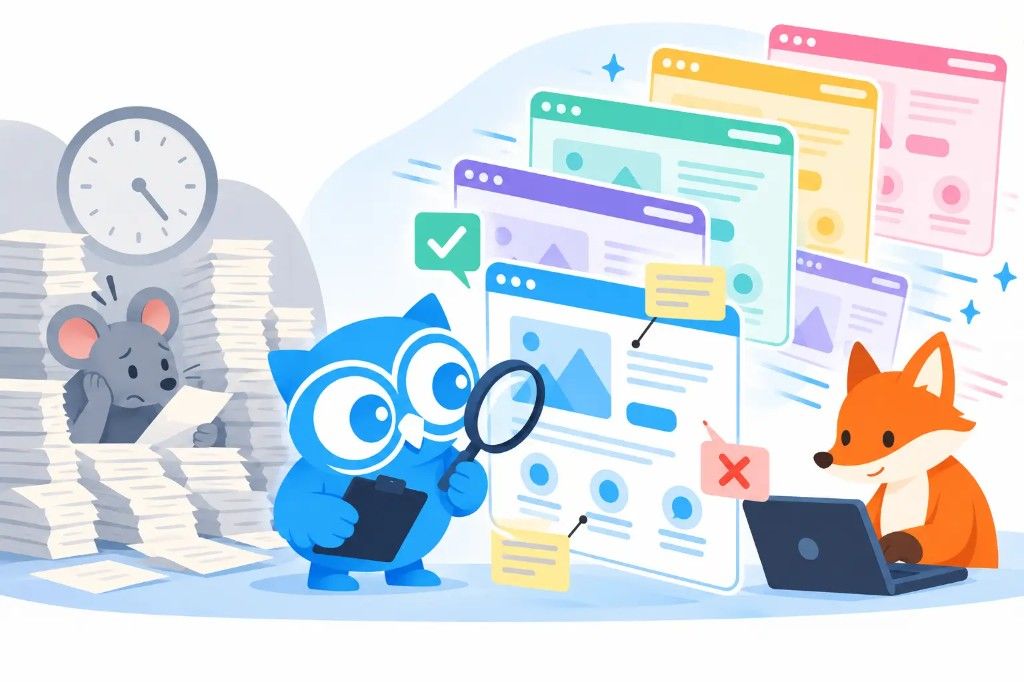
A lot of marketing teams are asking the same question this year: why wait days for an agency when AI can turn something around in hours? We understand why. Budgets are tighter than they were, and the tools really have gotten good.
So some companies switch to a cheaper shop that lets AI do most of the work. The first drafts come back fast, and for a few weeks that feels like the right call. The drafts look finished. The facts can be wrong, the point can belong to anyone, and the reader finishes with no reason to talk to you.
The Shift Is Real
Gartner found 39% of CMOs plan to cut agency spend this year, and 22% said AI is the reason they need agencies less (MeasureU (opens in new tab)). Forrester expects agency jobs to drop 15% in 2026 after an 8% cut last year (Forrester (opens in new tab)).
Some of that is deserved. A lot of agencies have been slower than their clients needed, and we've had to look hard at our own process too. If AI pushes the industry to move faster, we think that's a good thing.
The Backlash Is Real Too
Audiences are also losing patience with content that feels machine-made. A Fractl study found that 40% of consumers now say heavy AI use would lower their trust in a brand, double the 20% who said so in 2025 (Substack (opens in new tab)). Gartner found that half of US consumers would rather buy from brands that avoid generative AI in customer-facing content.
It shows up in results as well. In a study by Ipsos and Syracuse Newhouse, human-made ads did 14% better on short-term sales and 17% better over the long term (Grey Journal (opens in new tab)). Some companies that replaced people with AI have started rehiring for the same roles six to twelve months later (Washington Times (opens in new tab)).
What surprised us is that most people can't reliably tell when something was written by AI. They notice when work is careless, and they respond to that.
So who actually wants this? On paper, whoever signs off on the budget, because the invoice looks better. But the marketing team ends up rewriting half of it, and the customers it was written for scroll right past it. However the work gets made, there's still a human on the other end deciding whether to trust you, and that's who it has to be good for.
The Cleanup Nobody Budgets For
When nobody experienced checks the output, the same problems come up on websites and marketing over and over.
The most common problem we see now is simply too much copy. When words cost almost nothing to produce, it's tempting to publish all of them. Teams assume more information is more helpful, so pages keep getting longer and nobody cuts anything.
Most visitors skim. The one point that mattered gets buried.
Knowing what to leave out has always been part of good work, but now that anyone can generate pages of copy in seconds, editing is quickly becoming the most valuable skill on a marketing team.
There's a search cost too. Thin, repetitive content and poorly structured pages make it harder for Google and AI assistants like ChatGPT to understand what a business does, so it gets recommended less.
And eventually someone on the client's team starts checking and fixing everything before it goes out. That time costs money too, and it usually isn't in anyone's budget. We wrote more about this in The Real Cost of Cheap Design.
You Still Have to Know What to Ask For
AI does what you tell it to do. If you don't know a site migration needs proper redirects, you won't ask for them, and the AI won't add them on its own. Accessibility is the same, and so is analytics tracking. Those only come up once you've done this work for years.
That's why we use AI heavily and still put senior people on every project. Because we use it every day, we've seen where it goes wrong, and we know which steps need a person and which ones can run on their own.
On a recent website migration, our team wrote Python scripts to move a large part of the content between page builders automatically. It cut the timeline to about a week. The scripts did the repetitive part. Our team decided how the pages should be structured and went through every one before launch, and there was plenty the automation missed.
Design Still Takes a Designer
AI can put together a layout that looks polished, but it pulls from what it has already seen, which is why so many AI-built sites end up looking alike. A good designer decides where your eye should land first and how much empty space a page needs, and knows when a brand should break its own rules.
That comes from taste and years of practice, and it's a big part of what makes a site feel like it belongs to one company. We wrote more about this in AI Can't Replace Your Designer. But It Might Replace Your Bad One.
It's About More Than the Website
The pages are only one piece of the job. A website or a campaign is worth something only if it moves the business forward, so we spend as much time on strategy and analytics as on the pages themselves. The question we keep asking is whether it's bringing in leads.
An AI tool will happily write you another page. It won't notice that the last three didn't produce a single lead, or that the real problem is what happens after someone fills out the form. Honestly, that's most of what clients pay us for.
We think that's what clients actually want from an agency now. They want the speed AI makes possible, with someone accountable for whether the work is right and whether it's working. There's more on how we think about this in Good Copywriting Isn't Writing. It's Deciding.
If You're Thinking About Switching
If what you need is a lot of content produced quickly, an AI-first shop might be enough. Plenty of vendors will take the order, run it through a tool and send it back the same day.
That's rarely what our clients tell us they're looking for, though. They want a partner who takes the time to understand their business and their goals, and who will tell them when an idea isn't going to work. They care whether their site is still bringing in customers a year from now, and they want their agency to care about that too. If that sounds like you, look closely at the work a provider has launched for other clients before you switch, and ask who on their team would be responsible for yours.
We use AI every day and we'd be slower without it. We also know it works best in the hands of people who've done the job long enough to know what good looks like. If you're weighing that tradeoff right now, we're happy to talk it through.
Sources
- Why 15% of Agency Jobs Will Disappear in 2026 (MeasureU) (opens in new tab)
- Predictions 2026: Marketing Agencies (Forrester) (opens in new tab)
- Stop the Slop (Substack) (opens in new tab)
- AI slop backlash in 2026 isn't about getting caught (Grey Journal) (opens in new tab)
- Companies rehire workers after AI replacements fail (Washington Times) (opens in new tab)