
Good Copywriting Isn't Writing. It's Deciding.
Anyone can write a sentence. The hard part is knowing which sentence to write.
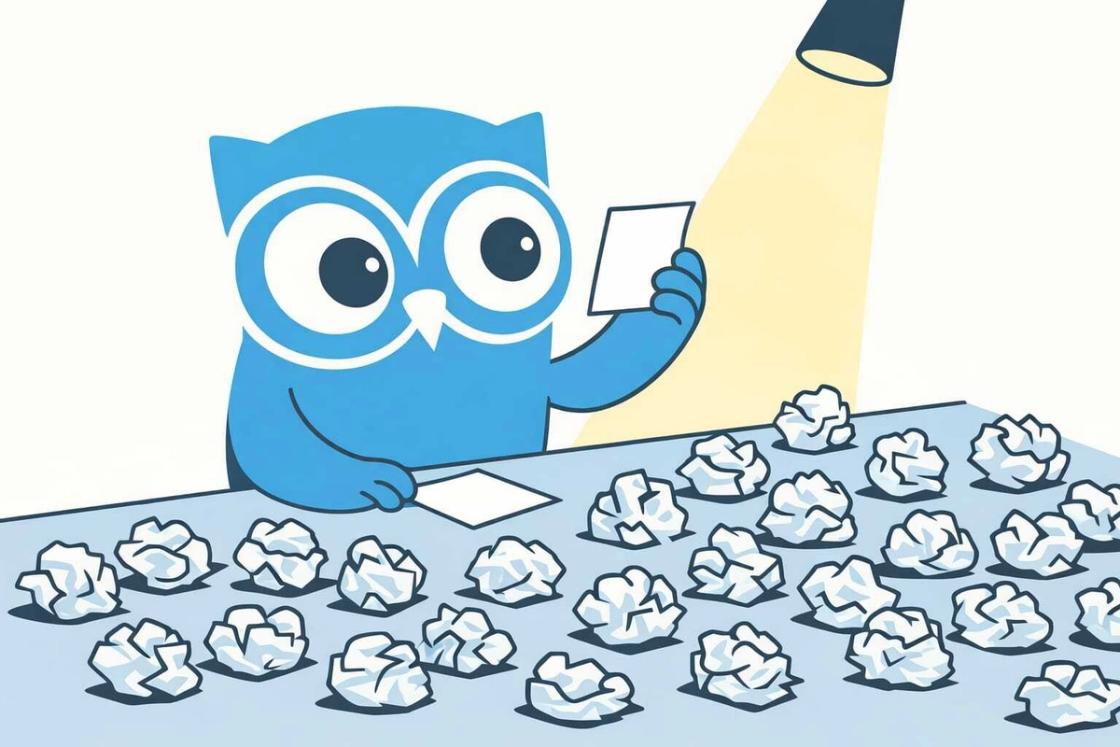
Your company needs a new landing page. Someone on the team sits down, opens a doc, and starts writing. Two hours later there’s a full page of copy. It’s grammatically correct. It covers the product features. It has a call to action at the bottom. It’s also going to convert at about 1% because nobody stopped to think before they started typing.
There’s a misconception that copywriting is about being clever with words. Finding the perfect turn of phrase. Writing something that makes people go “ooh, that’s good.” And sure, craft matters. But the actual hard work of copywriting has almost nothing to do with writing. It has everything to do with deciding.
Every piece of copy is an argument. If you don’t know what you’re arguing for, the words don’t matter.
Writing
- Starts with a blank page and starts typing
- Focuses on grammar, flow, and clever phrasing
- Covers all the product features
- Tries to speak to everyone
- Measures success by word count and polish
Copywriting
- Starts with research, interviews, and strategic decisions
- Focuses on the one thing the reader needs to believe
- Addresses specific objections and pain points
- Speaks to one specific person with one specific problem
- Measures success by conversion rate and business impact
It Starts With Decisions
Before you write a single word, you need to answer a bunch of questions that most people skip.
- Who are you talking to? Not “small business owners” or “enterprise buyers.” Specifically. The VP of Marketing at a mid-size SaaS company who’s been burned by her last agency and is skeptical of promises. That’s a person you can write to. “Decision-makers” is a demographic, not a person.
- What’s keeping them up at night? What have they already tried? What are they skeptical about?
- What’s the one thing you need them to believe after reading this? Not three things. One. If you can’t narrow it down, you’re not ready to write yet.
- What action do you want them to take? And what’s stopping them from taking it right now? Those objections need to be addressed in the copy, not ignored.
Every piece of copy is an argument. If you don’t know what you’re arguing for, the words don’t matter.
The Decision Framework
Here’s what we work through before anyone writes a word. This isn’t a creative exercise. It’s strategy.
Audience
Single message
Barrier
Proof
Action
Tone
If you can’t fill in every one of those clearly, you’re not ready to write. You’re ready to do more research. And that research — talking to customers, reading support tickets, sitting in on sales calls — is where the real copywriting happens.
Why AI Copy Falls Flat
AI can write grammatically correct, tonally appropriate sentences all day long. It's great at that. What it can't do is make strategic decisions about what to say and what not to say.
It doesn't know that your audience is tired of being called “innovators.“ It doesn't know that your competitor just launched a similar product and you need to differentiate on implementation speed, not features. It doesn't know that your CEO promised the board you'd hit a specific number this quarter and the landing page copy needs to drive urgency without sounding desperate.
Copy is strategy made visible. AI also doesn’t know what to leave out — knowing your product has twelve features but only three matter here. Copy is strategy made visible. And strategy requires context that AI doesn’t have.
The Editing Is Where It Happens
First drafts are easy. Everybody's got a first draft. The real skill is cutting. Knowing which paragraph is fluff. Which sentence is trying too hard. Which section buries the lead. Which headline is clever but confusing.
Good copywriters spend more time deleting than writing. They're willing to kill the line they're most proud of if it doesn't serve the reader. That restraint is what separates copy that performs from copy that just... exists.
Here’s a quick editing checklist:
- Does the first sentence earn the second?
- Can you cut the first paragraph entirely?
- Does every sentence pass the “so what” test?
- Is the CTA earning its click?
Common Copy Mistakes
Leading with features
Writing for everyone
Burying the value prop
Write Less, Say More
The best copy on the internet is short. Not because short is always better, but because most writing has 40% unnecessary words in it. Remove the throat-clearing. Remove the qualifiers. Remove the sentences that repeat what you already said in a slightly different way.
If your About page is 1,200 words and nobody reads past the first paragraph, you don't have a 1,200-word About page. You have a one-paragraph About page with 1,100 words of decoration.
The next time you need copy written, don’t start with writing. Start with deciding. Figure out who you’re talking to, what you need them to believe, and what’s standing in the way. The words will follow. They always do.