
Nobody Uses Your Brand Guidelines. Here's Why.
You spent months on a beautiful brand guide. It lives in a folder nobody opens. Sound familiar?
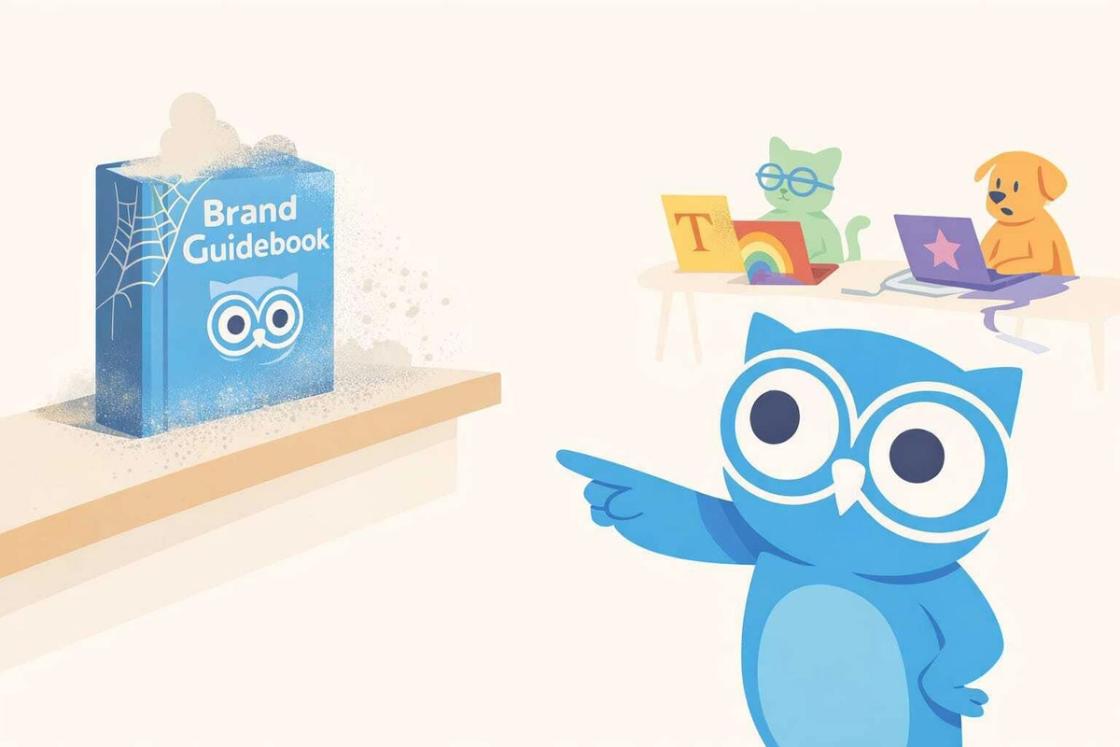
We’ve inherited enough brand projects to see the pattern. The previous agency delivered a gorgeous 60-page PDF. Professional photography. Elegant layouts. Detailed specifications for logo usage, color values, typography scales, photography direction, tone of voice, and how much whitespace to leave around the logo. Real careful work. Clearly cost a lot.
Then we ask: does your team actually use this?
Silence. Sheepish grin. “Not really.”
Nobody uses it. Not the marketing coordinator making social graphics. Not the sales team building decks. Not the CEO who approved the budget for it. The company spent five figures on a document that functions as a digital paperweight.
The Brand Guide Graveyard
We’ve seen hundreds of brand guides. Beautiful ones. Award-worthy ones. Documents that clearly took months to create and cost tens of thousands of dollars. And the pattern is always the same.
Month one after delivery: the team references it occasionally. Month three: someone bookmarks the PDF and forgets about it. Month six: a new hire asks “do we have brand guidelines?” and three people give three different answers about where to find them. Month twelve: marketing is using colors they pulled from the website by eyedropper because nobody can find the official hex codes.
This isn’t a discipline problem. It’s a design problem. The brand guide itself was designed for the wrong audience. It was designed to impress the client, not to be used by the team. And there’s a big difference between a document that’s impressive and one that’s useful.
A brand guide designed to impress the client is a coffee table book. A brand guide designed to be used by the team is a tool. Most companies have the wrong one.
Why Brand Guides Fail
They’re too long
They’re too rigid
They don’t include the stuff people actually need
They’re static in a dynamic world
They live in the wrong place
Brand Guide That Fails
- 60+ pages nobody reads
- Lives in a buried Google Drive folder
- Specifies every possible scenario rigidly
- Theory without templates or tools
- Static PDF frozen in time
- Designed to impress the client
Brand Guide That Works
- 1–4 pages of essential rules
- Lives where your team already works
- Teaches principles that flex to new situations
- Includes ready-to-use templates for real tasks
- Living document that evolves with the business
- Designed to be used by the team
The Brand Consistency Audit
Want to see how well your current brand guide is working? Do this exercise. It takes about 15 minutes and the results are usually eye-opening.
Pull up the last 10 pieces of marketing your company produced. Social posts, emails, presentations, one-pagers, whatever you can find. Lay them out side by side. Now answer honestly:
Color consistency
Font consistency
Voice consistency
Recognition test
Intentionality check
If more than half fail this test, your brand guide isn’t working. It doesn’t matter how beautiful it is. It’s not doing its job. The output is the evidence.
What Works Instead
Short guidelines. Two pages, maybe four. The essential rules, not every possible rule. Clear examples of right and wrong — showing “do this, not this” is worth more than five paragraphs of explanation. And most importantly, ready-to-use templates for the things your team actually makes: social posts, email headers, presentations, one-pagers, proposals.
The Brand System Approach
We build what we call brand systems rather than brand guides. The difference is practical, not theoretical.
A one-page quick reference
A template library in the tools your team uses
A shared asset library
A living brand site
The Goal Isn’t a Beautiful Document
The goal is consistent execution. And consistent execution comes from making the right choice the easy choice. If staying on-brand is harder than going rogue, people will go rogue every time. That’s not a character flaw. It’s human nature.
Your brand guide doesn’t need to win a design award. It needs to be so useful that your team reaches for it instinctively. Short enough to read. Practical enough to apply. Accessible enough to find. If your current guide doesn’t meet those criteria, it’s not a guide. It’s a souvenir from a branding project that ended too soon.
The work doesn’t stop when the guidelines are delivered. It starts. And the companies with the strongest brands aren’t the ones with the fanciest brand guides. They’re the ones where every person on the team knows how to make something that looks and sounds like the company — without having to think about it.