
Stop Redesigning. Start Optimizing Your Website.
You don't need a new site. You need to figure out why the current one isn't working.
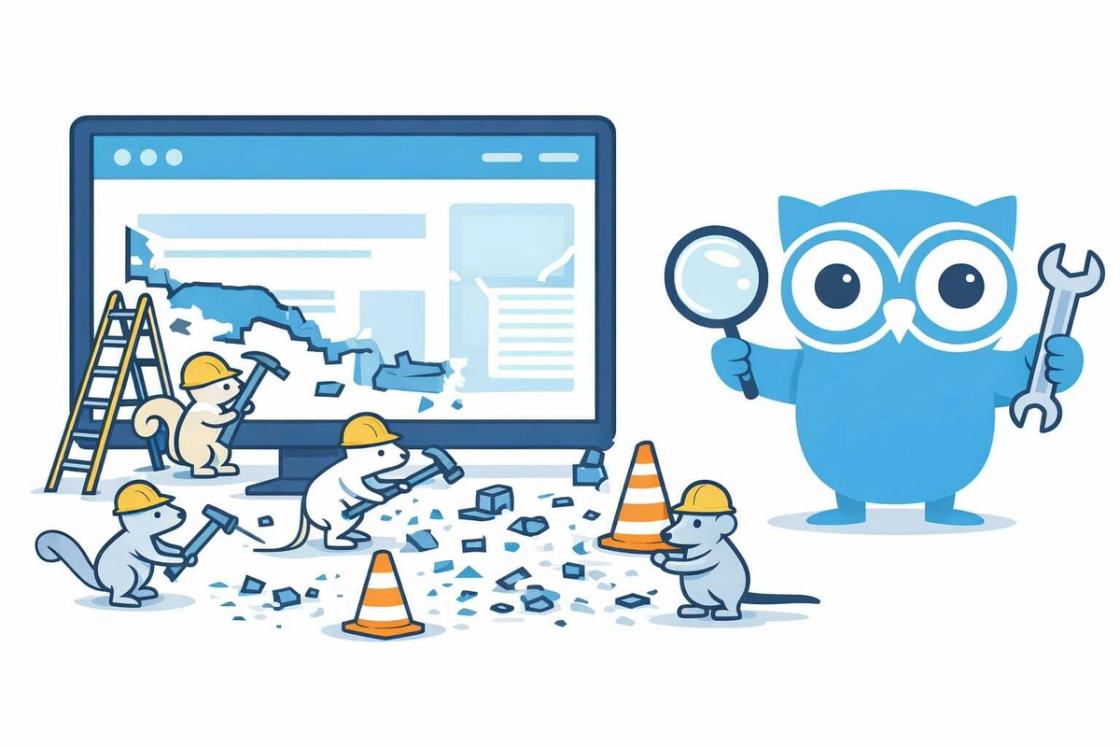
Every two or three years, companies get the itch. The website feels stale. A competitor launched something sleek. The CEO saw a site they liked and now yours looks old. The VP of Sales got a comment from a prospect about it looking “dated.” So the conversation starts: “We need a redesign.”
This conversation has launched more expensive, unnecessary projects than any other sentence in business.
Sometimes you genuinely need a new site. But more often, you need to fix what’s broken on the current one before spending six months and a lot of money replacing it with something that might have the exact same problems.
$0K–$80K
typical cost of a full website redesign
0%
of redesigns show no measurable improvement in conversions
0 days
to see results from optimization vs. 6+ months for a redesign
The Redesign Trap
Here’s how it usually goes. You spend four to six months building the new site. It launches to internal applause. The team is proud. The CEO posts about it on LinkedIn. Then a month passes. Traffic stays about the same. Conversions stay about the same. Six months later someone says “the website isn’t working” and the cycle starts again.
The issue is that most redesigns are visual. New look, same structure, same content, same calls to action, same user journey. If the strategy was wrong, a prettier version of the wrong strategy is still wrong. You didn’t fix the car. You just repainted it.
We’ve seen this pattern dozens of times. A company spends $40K–$80K on a redesign. It launches. The conversion rate doesn’t change. Bounce rate stays the same. Lead volume is flat. But everyone agrees the site looks better, so nobody asks the hard question: did this investment actually do anything?
The dirty secret of web redesigns is that most of them don’t move the needle. They move the aesthetics. And aesthetics, while they matter, are rarely the thing that’s actually broken.
If the strategy was wrong, a prettier version of the wrong strategy is still wrong. You didn’t fix the car. You just repainted it.
What’s Actually Broken (It’s Probably Not the Design)
When a website isn’t performing, the problem almost always falls into one of four categories. None of them require a full redesign to fix.
The messaging is wrong
- Your headline doesn’t resonate.
- Your value proposition is buried.
- Your copy talks about features when it should talk about problems.
- Visitors land on your site and can’t figure out what you do, why they should care, or what to do next.
The user journey is broken
- People land on the wrong pages.
- The navigation is confusing.
- The path from “I’m interested” to “I want to talk to someone” has too many steps.
- Your most important CTA is buried below the fold.
The technical foundation is cracked
- Slow load times.
- Broken mobile layouts.
- Forms that don’t work.
- Missing analytics.
The content is stale
- Blog posts from 2023.
- Case studies that feature a product you don’t sell anymore.
- A team page with people who left two years ago.
The Optimization-First Approach
Before you spend a dollar on a redesign, do these four things. They’ll take 2–4 weeks and will either solve your problem or give you the data to actually brief a redesign properly.
Look at the data
Talk to your customers and your sales team
Fix the content first
Run a technical audit
The 90-Day Optimization Playbook
Once you’ve done the audit, build a 90-day optimization calendar. This beats a big redesign because you’re making data-driven decisions instead of aesthetic ones.
Month one: fix the technical issues. Speed, mobile experience, broken elements. These are the foundations that affect everything else.
Month two: optimize your top 5 pages by traffic. Rewrite headlines. Improve CTAs. Add or update social proof. Address the objections your sales team keeps hearing. Test one change at a time so you know what moved the needle.
Month three: fill content gaps. Build the pages your customers are asking for. Update case studies. Add testimonials. Write the FAQ that your sales team answers on every call.
At the end of 90 days, check your metrics. If conversions improved, keep optimizing. If they didn’t, you now have three months of data that tells you exactly what a redesign needs to address. Either way, you’re in a better position than if you’d jumped straight to a redesign and hoped for the best.
Redesign
- 4–6 months before anything changes
- $40K–$80K+ investment
- Based on aesthetics and opinions
- Replaces everything, including what worked
- Results unknown until after launch
Optimize
- Improvements within weeks
- $10K–$25K for a 90-day sprint
- Based on data and user behavior
- Keeps what works, fixes what doesn’t
- Measurable results at every step
When You Actually Need a Redesign
To be clear: sometimes a redesign is the right call. Here are the legitimate reasons.
Technically broken beyond repair
Unusable CMS
Business has fundamentally changed
No conversion architecture
These are valid reasons. “I’m bored of how it looks” is not. “A competitor has a nicer site” is not. Those are feelings, not business cases. And feelings are expensive reasons to spend $50K on a new website.
If You Do Redesign, Do It Right
If you go through the optimization process and determine that a redesign is genuinely necessary, bring your optimization data with you. Every insight you gathered — which content performs, which CTAs convert, what your customers actually want, where the drop-offs happen — becomes the brief for the new site.
That’s how you build a redesign that actually outperforms its predecessor instead of just looking different. A redesign informed by data has a purpose. A redesign informed by “we just want something fresh” has a budget and a prayer.
The best website projects we’ve delivered started with optimization. We learned what worked on the existing site, what didn’t, and why. Then we designed the new site around those insights. The result was a site that launched already performing better — not one that launched pretty and then needed six months of tweaking to figure out what it should actually say.